AI WEIWEI COMES TO DELHI, AND THE CONVERSATION BEGINS AT SHALINI PASSI’S HOME
AI WEIWEI COMES TO DELHI, AND THE CONVERSATION BEGINS AT SHALINI PASSI'S HOME
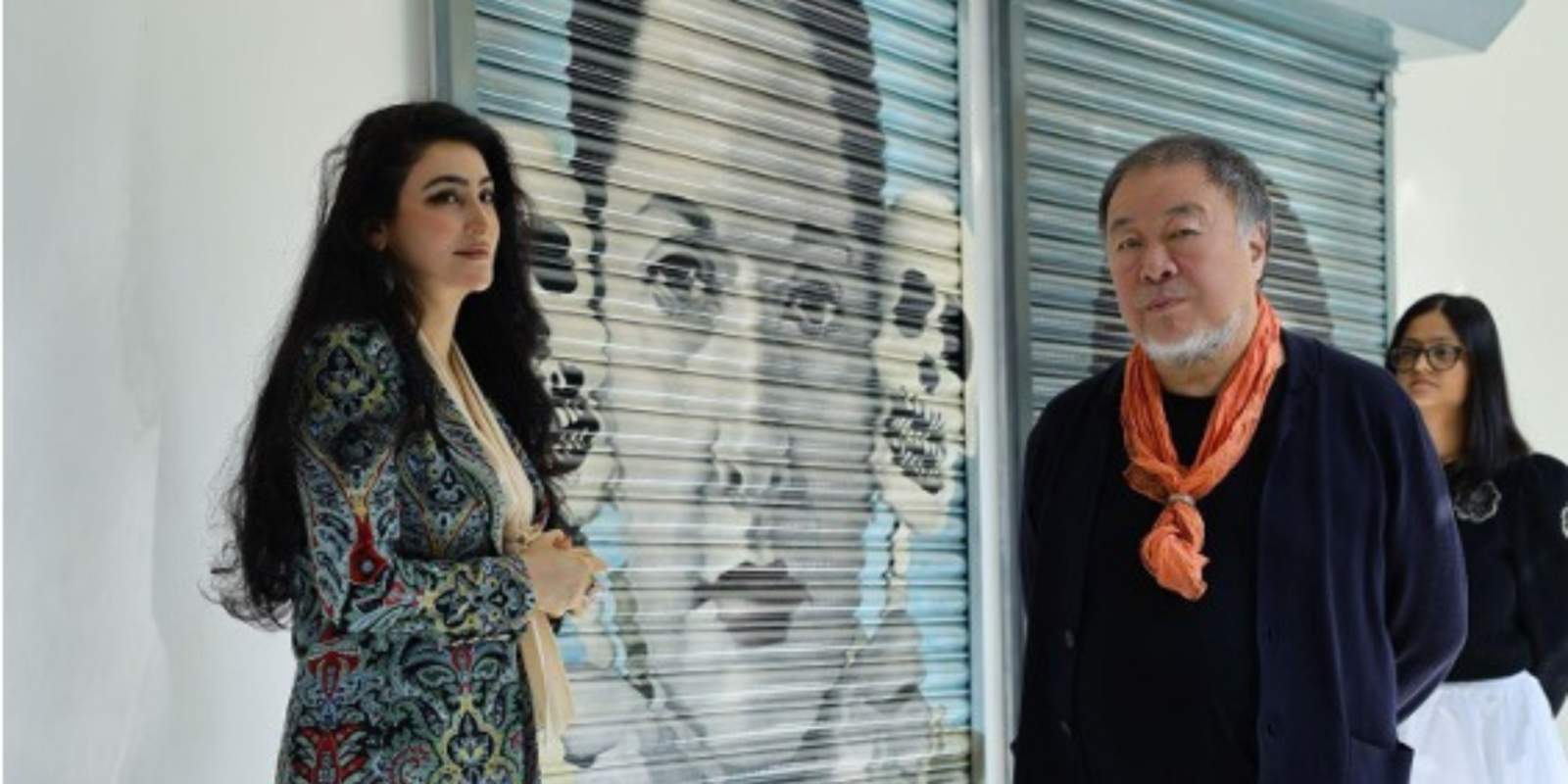
For those who truly understand art, a home is never just a home. It is a position, a statement, a curated act of belief. When Shalini Passi welcomed Ai Weiwei to her New Delhi residence on the 7th of February 2026, it was one of those moments. The artist was in the city for his first solo exhibition in India at Nature Morte, but what unfolded that afternoon felt like a different kind of showing, one without walls, curators, or press notes.
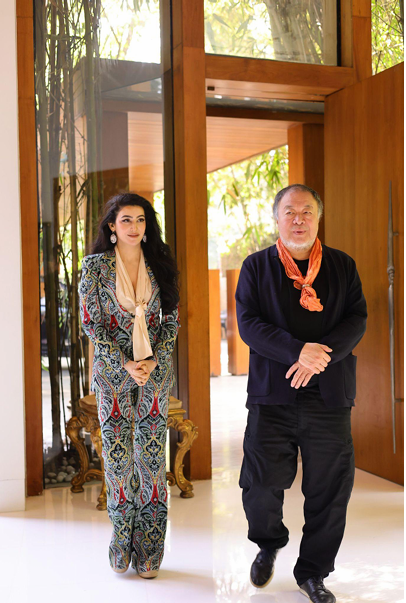
1Shalini Passi and artist Ai Weiwei at her New Delhi residence
Passi has followed Ai Weiwei’s practice for years, and what has always drawn her to his work is precisely what makes it difficult to look away from: it refuses comfort. Where many artists invite the viewer in gently, Ai Weiwei sets the terms.
His seminal 1995 act of dropping a Han Dynasty urn to the floor and letting two thousand years of civilization shatter was not vandalism. It was a question, asked with both hands: What do we preserve, and why? Who decides what is sacred?
Passi sees in that gesture something she believes all meaningful art must do. It must demand something of the person standing before it.
This is why, for Passi, his body of work resonates as deeply as it does in an Indian context. India is a civilisation that lives amidst its own contradictions — ancient monuments and modern ambition, reverence and reinvention existing side by side.
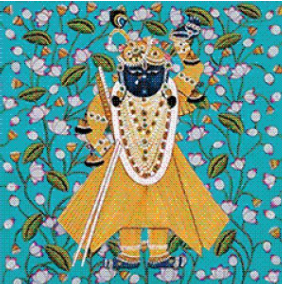
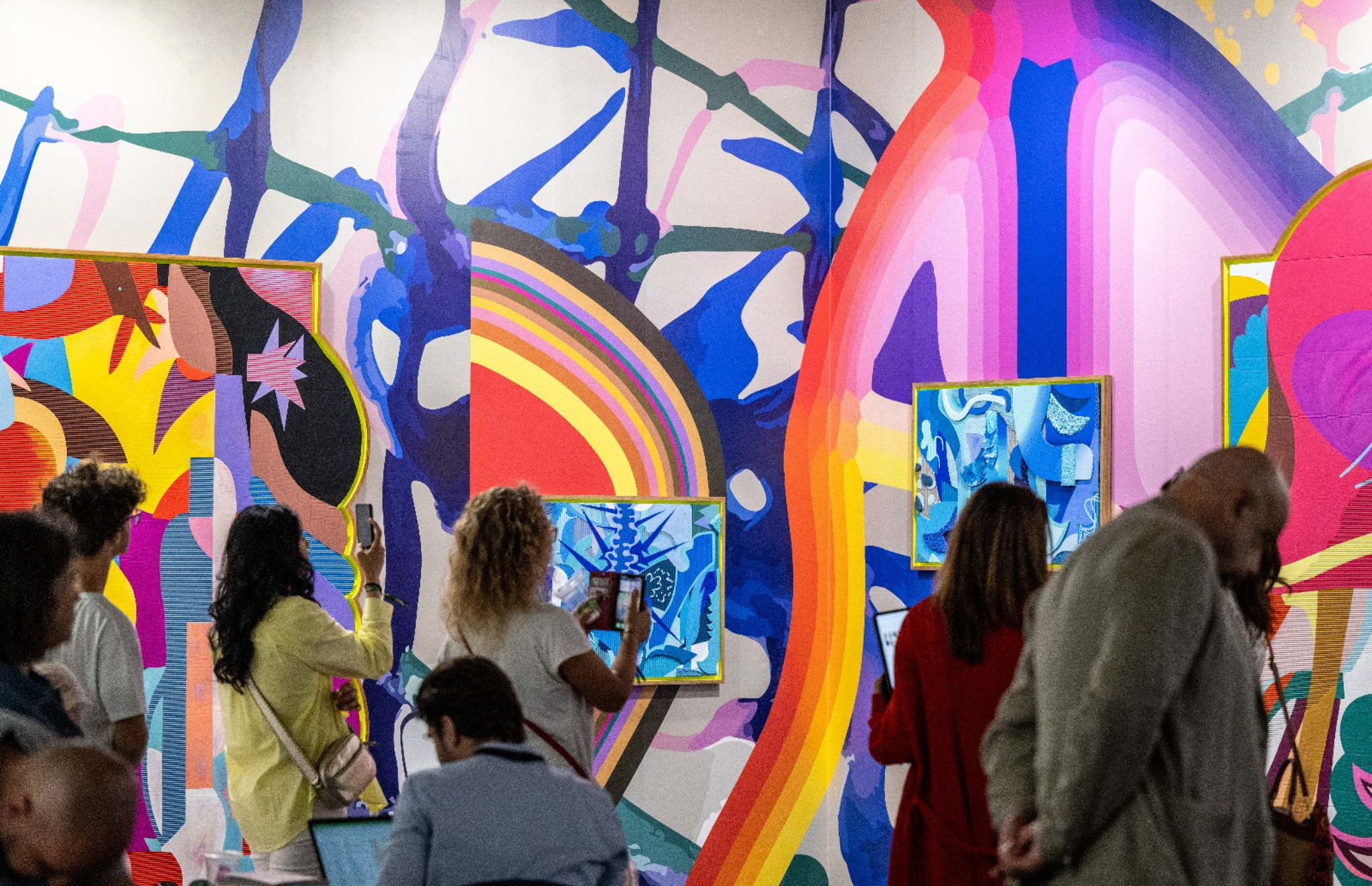
Ai Weiwei’s practice, built across decades of challenging authority through material and memory, speaks directly to that negotiation. His monumental Lego compositions, in which mass-produced plastic becomes the carrier of sacred geometries and cultural traditions, do not mock what they reference. They ask what survives when the medium changes.
Pichwai, 2025 Toy bricks 74 3/4 x 74 3/4 in 190 x 190 cm
They ask whether meaning lives in the material, or in the relationship between a maker and the world they are speaking to. These are questions, Passi believes, that India is uniquely positioned to answer.
When Ai Weiwei arrived at her home, he brought that same quality of attention his work demands. He was immediately struck by the space’s openness, the quality of natural light, and the way bamboo elements within the architecture softened the structure and drew the outside world inward.
He returned to the bamboo again and again, visibly moved by how it held the building in quiet conversation with nature. He described the home as open, green, and thoughtfully composed, and for Passi, who has always believed that a home should feel like a living argument for the importance of art, it was a recognition she valued.
He engaged closely with her collection. The delicate spatial precision of Zarina’s works held his attention; he spent considerable time with Husain’s paintings, and Bharti Kher’s pieces drew a warm, thoughtful response and appreciation for the variety of materiality and surface that Passi has assembled with purpose over the years of collecting.
For her, this was not incidental. She sees Ai Weiwei as an artist who understands that objects carry the weight of the decisions made around them — who made them, under what conditions, and what they were asked to mean. That attentiveness, turned toward someone else’s collection, felt like a genuine act of respect.
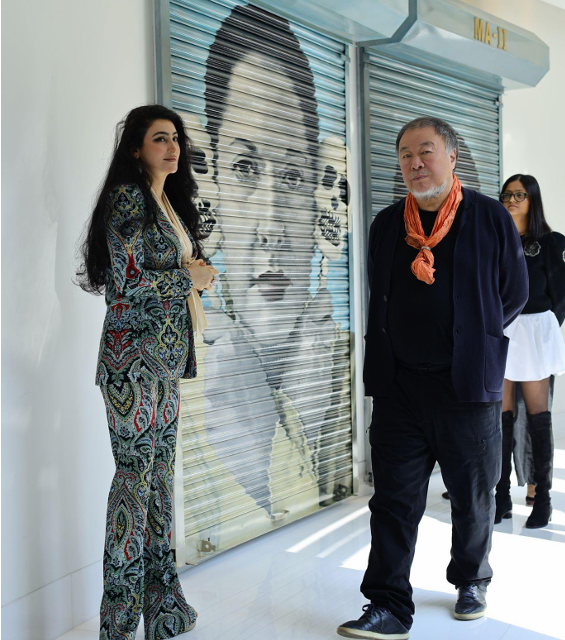
Shalini Passi and artist Ai Weiwei are pictured with an artwork by Atul Dodiya
The conversation moved, as the best ones do, across art, architecture, and the quiet politics of how we choose to surround ourselves with meaning.
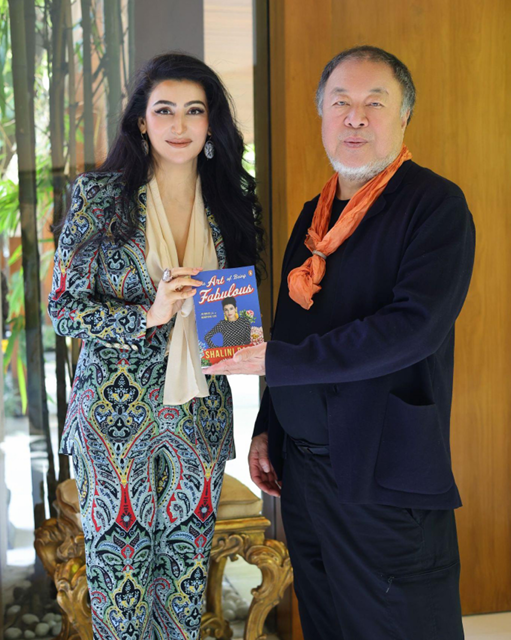
Passi shared her ongoing projects, her book, her Netflix series, and spoke about her belief that collecting is not accumulation but responsibility.
That resonated with Ai Weiwei, whose own practice has always insisted that the artist cannot stand apart from the systems they are critiquing. Art, for both of them, is not something you observe from a safe distance. It is something you are accountable for.
Shalini Passi with artist Ai Weiwei, alongside her book The Art of Being Fabulous
What the afternoon revealed was Passi’s role not merely as a collector but as a cultural connector, someone who creates the conditions for global artistic voices to engage honestly within an Indian context that is confident, curious, and internationally engaged.
Ai Weiwei’s work asks how civilisations remember themselves, and what happens when that memory is challenged or broken.
Passi’s home, and the life she has built within it, offers a living answer: art belongs not only to institutions, but to the spaces where people choose, deliberately and thoughtfully, to let it ask hard questions of them every day.
 MASH
MASH