At the 2026 edition of India Art Fair, MASH presented Echoes of Earth, bringing together the distinct yet resonant practices of Ann Carrington, A. Ramachandran, G. R. Iranna, Harshit Agarwal, and Sachin George Sebastien.
Five diverse practices converged with a quietly rigorous sensibility, foregrounding artists who engaged deeply with ecology not as surface imagery but as material condition, memory, rupture, and regeneration.
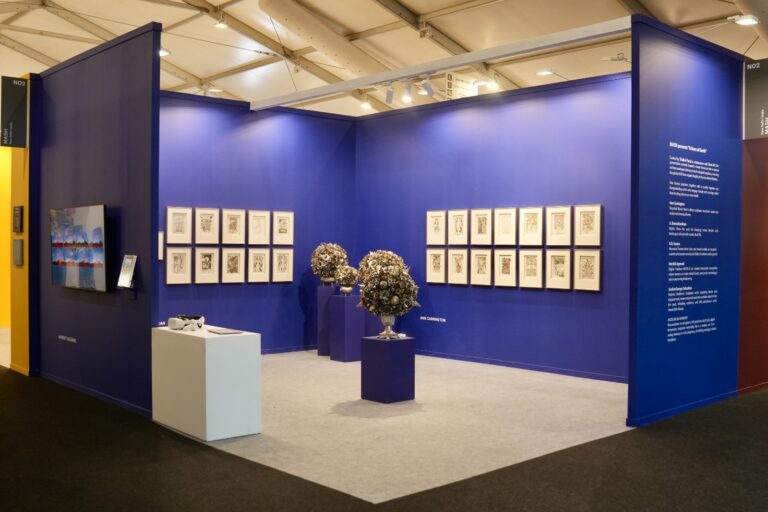
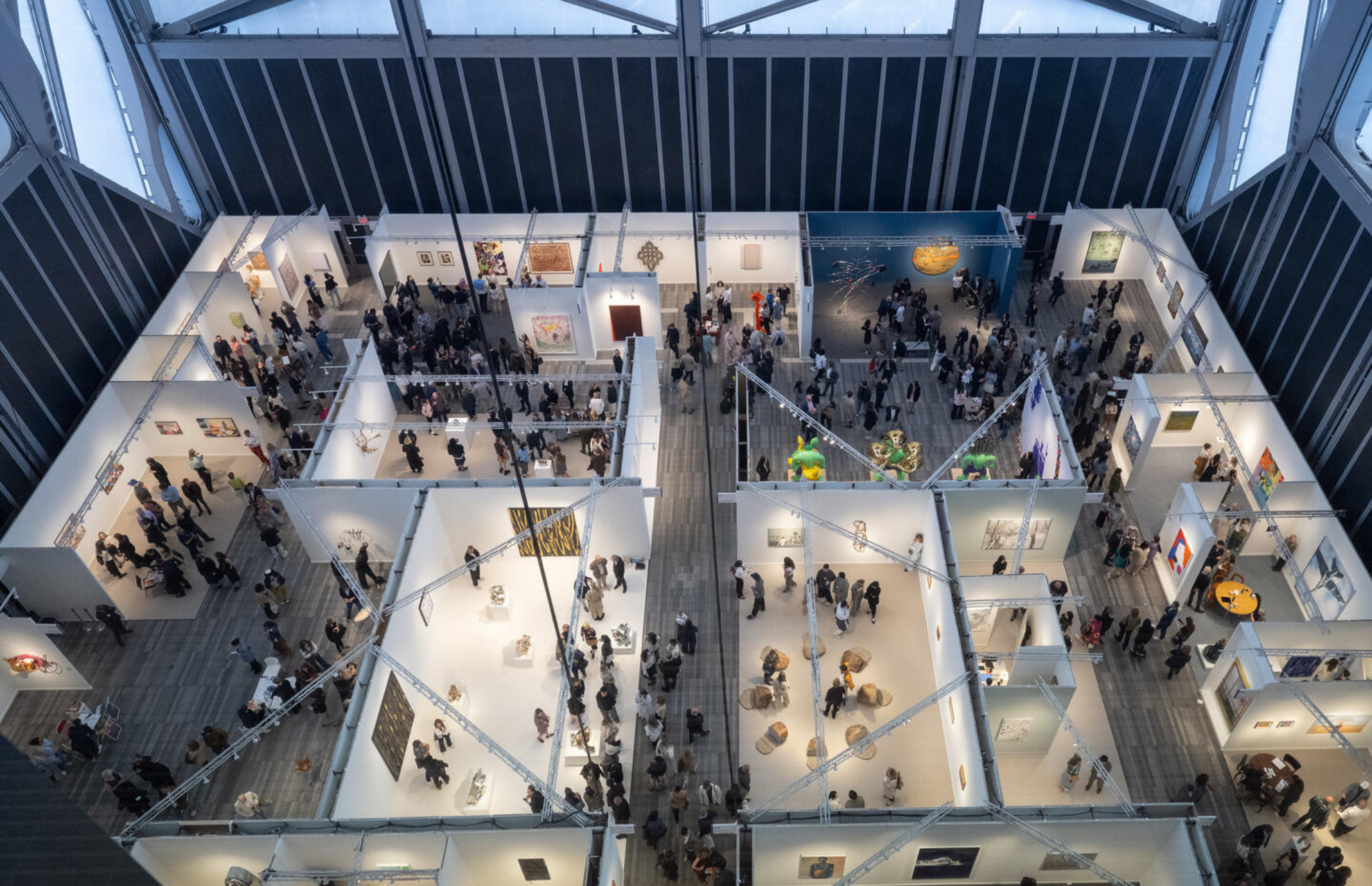
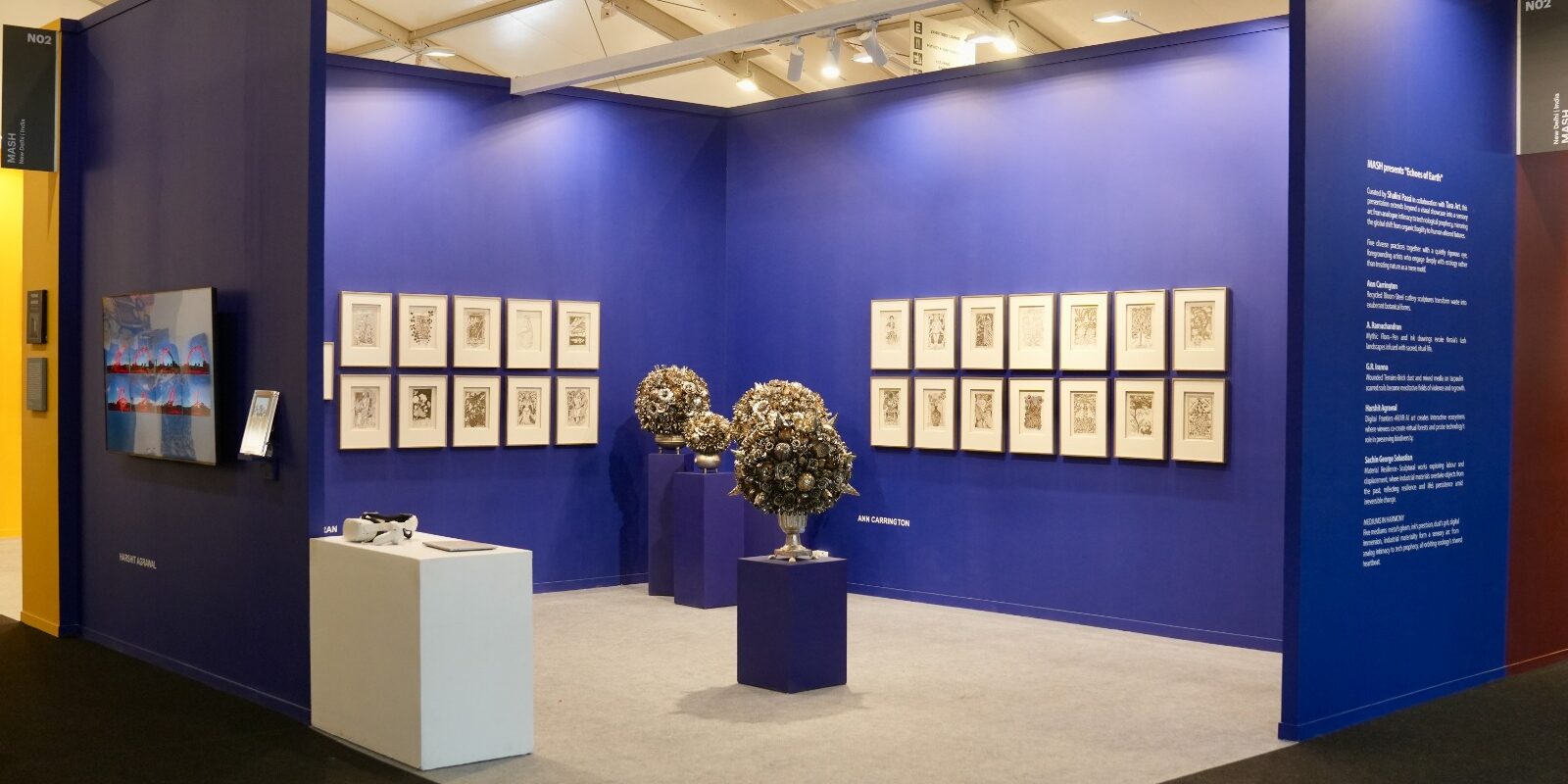
Installation view of MASH booth, IAF 2026
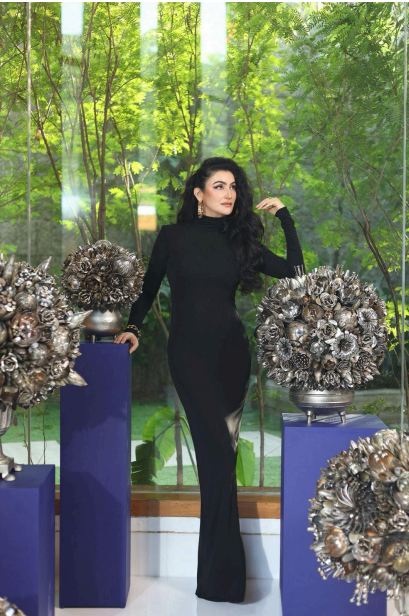
It situated ecology as a living, contested presence across mediums. Ann Carrington’s steel cutlery works transformed the remnants of consumption into intricate botanical sculptures, acting as subtle gestures of renewal. Rather than isolating nature as merely a visual theme, Echoes of Earth approached it as a complex and evolving condition, where material, memory, and environment remained deeply interconnected.
Shalini Passi with Ann Carrington sculpture
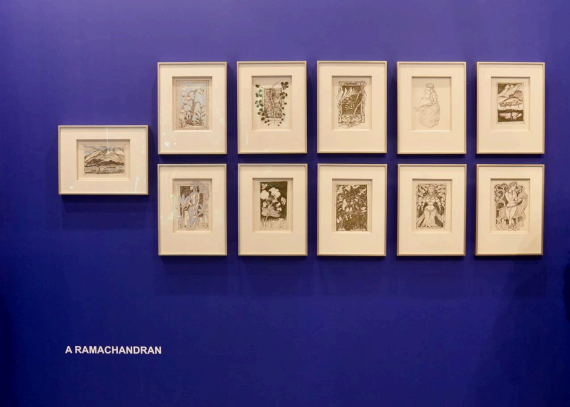
A. Ramachandran’s fine pen-and-ink lines gathered into dense, breathing landscapes where flora remained inseparable from myth and sacred life, carrying within them layers of cultural memory and ecological reverence.
A Ramachandran, Untitled (1993)
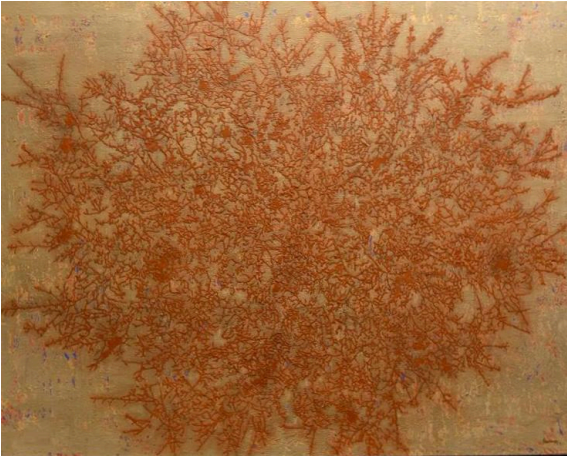
G.R.Iranna’s Dhul (2023) settled across tarpaulin surfaces like wounded soil—scarred, granular, and deeply contemplative. By using brick dust as his primary medium, Iranna conjured a landscape that merged the human body with the earth, creating meditative fields that explored the tension between violence and regrowth. The work traced ecological vulnerability while allowing resilience to surface through its nuanced textures, reminding viewers that the earth stood as a witness to both ruin and renewal.
G. R Iranna, Dhul (2023)
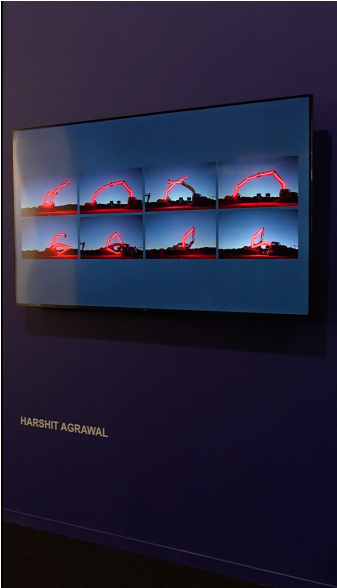
Alongside these tactile investigations, Harshit Agarwal’s Data Excavation used AI to reveal the hidden architectures of the environment. Through speculative code and digital immersion, Agarwal transformed raw data into glowing, skeletal landscapes. Here, the digital did not replace the natural; instead, it interrogated the structures built upon it, confronting the potential of technology as a tool for mapping and witnessing a rapidly changing world.
Harshit Agrawal, Data Excavation (2025)
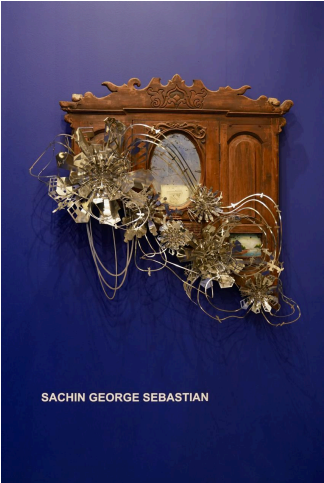
Interwoven within this material and conceptual arc, Sachin George Sebastien’s layered surfaces and organic forms echoed geological time and fragile habitats. His works carried a tactile intensity that suggested erosion, sedimentation, and the quiet persistence of life. Through restrained palettes and nuanced textures, Sebastien traced ecological vulnerability while allowing resilience to surface gently, almost imperceptibly.
Sachin George Sebastian, Conversation across times (2022)
Across the booth, Carrington’s metal gleam met Ramachandran’s ink precision; Iranna’s dust and grit met Agarwal’s digital immersion; Sebastien’s layered pigment met speculative code. Together, these mediums constructed a sensory continuum from analog intimacy to technological foresight while orbiting a shared ecological heartbeat.
Echoes of Earth ultimately resisted spectacle in favour of attentiveness. Waste became bloom. Myth became archive. Ruin became a field. Code became forest. Surface became sediment. The exhibition did not treat nature as a backdrop; instead, it revealed it as a collaborator, a witness, and a consequence.
It emerged as a site where material histories and possible futures intersected, reminding viewers that ecology was not a subject to be illustrated but a reality shaping every act of making, building, and imagining.
 MASH
MASH