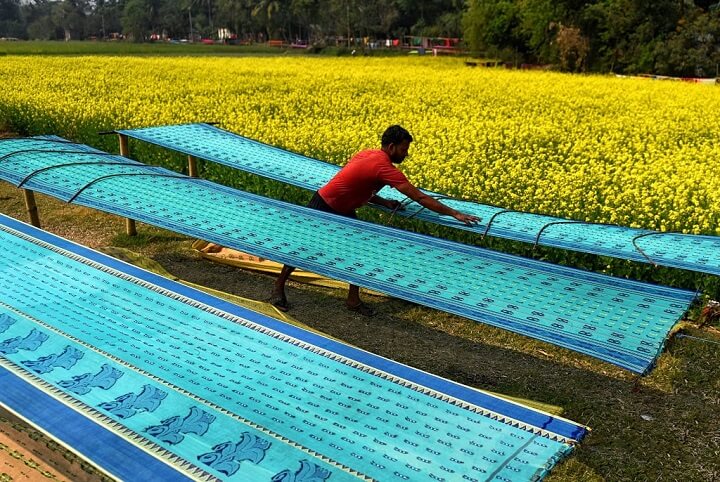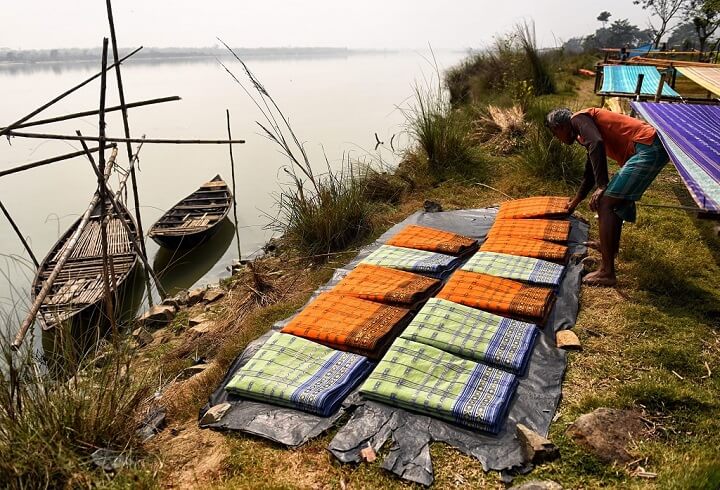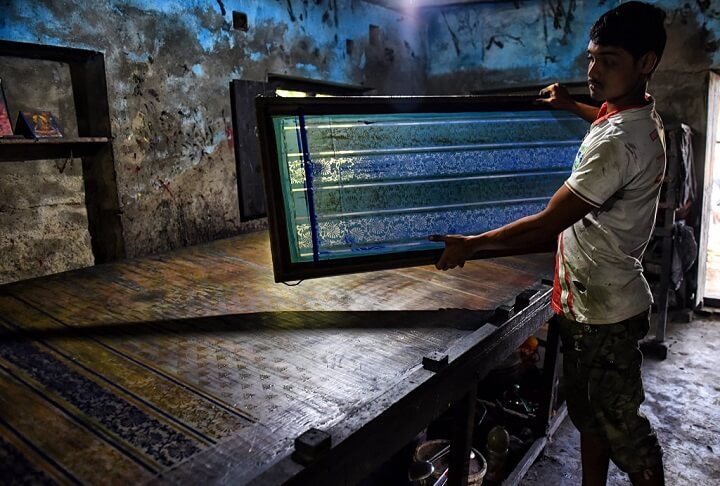

With shops/markets closed due to the on-going threat of COVID 19, the weaving communities have incurred huge losses as the month of March & April (Chaitra Sale) are some of the busiest months of the year, leading up to Bengali New Year (on April 14th). The need of the hour is to provide retail and e-commerce support with an aim to boost business and revive endangered weaves and communities.
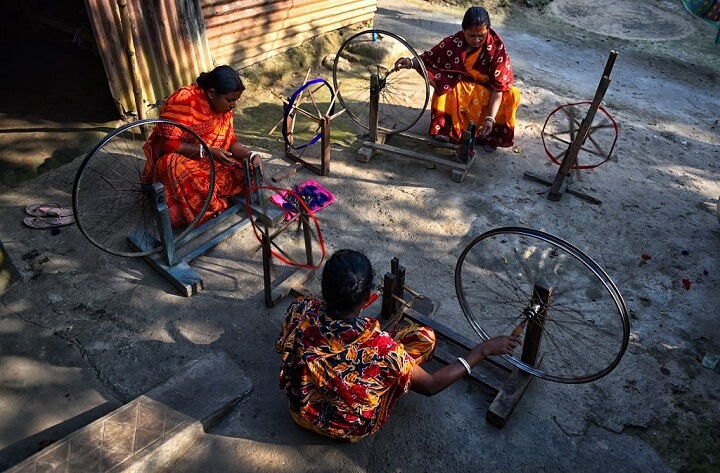 Local women spinning the cotton yarn
After the partition of Bengal in 1947, many weavers from Bangladesh migrated to India and were rehabilitated in West Bengal. Fulia, a town neighboring Shantipur became a new home for these weavers from Tangail, who brought with them the weaving traditions of their ancestral land. Other weaver communities were settled in the Hooghly and Burdwan districts of West Bengal. Over the years, each of these regions developed their own style of weaving and today, they are the homes of the most well-known varieties of tant sarees and textiles.
A quintessential six and a half yard Tant saree is characterized by thick two-to-four inch borders and a decorative pallu. Woven using fine cotton yarn in a variety of floral, paisley and other artistic motifs, each saree takes 7-10 days to come alive. Some of the most traditional motifs are:
Burma (bumble-bee),
Taj (amulet),
Rajmahal (royal palace),
Ardha-Chandra (half-moon),
Chandmala (garland of moons),
Ansh (fish scale),
Hathi (elephant),
Nilambari (blue sky),
Ratan Chokh (gem-eyed),
Benki (spiral),
Tara (star),
Kalka (paisley) and
Phool (flower).
As an economic trade and industrial activity, the “Tantshilpa” (the art of weaving handloom sarees) occupies a place second only to agriculture in providing livelihood to the people of these communities. In an endeavor to showcase and celebrate their exemplary craft, “Atelier Pranay Baidya Tant Saree & Textile revival project” is partnering directly with weaver communities in the Santipur, Phulia, Nadia & Dhanikhali districts of West Bengal.
Founder & Fashion Designer Pranay Baidya, will be hosting regular workshops with the weavers, offering them creative direction and textile design expertise in developing an ongoing collection of modern-day Tant Sarees and Textiles that can be procured by yardage. The collection will be warehoused and cataloged at the designer’s Kolkata Atelier, and retail through leading multi-designer stores across the country, a nationwide calendar of experiential pop-ups and e-commerce portals to the Indian diaspora living overseas.
Text by Pranay Baidya
All Images Courtesy Avishek Das
Find out more about the artists and gallery:
blog.kiukart.com/tant-shilpa-an-everlasting-tradition-of-bengal
www.picuki.com/media/2233530862364163839
www.instagram.com/pranay_baidya
www.instagram.com/pranaybaidya.women
Local women spinning the cotton yarn
After the partition of Bengal in 1947, many weavers from Bangladesh migrated to India and were rehabilitated in West Bengal. Fulia, a town neighboring Shantipur became a new home for these weavers from Tangail, who brought with them the weaving traditions of their ancestral land. Other weaver communities were settled in the Hooghly and Burdwan districts of West Bengal. Over the years, each of these regions developed their own style of weaving and today, they are the homes of the most well-known varieties of tant sarees and textiles.
A quintessential six and a half yard Tant saree is characterized by thick two-to-four inch borders and a decorative pallu. Woven using fine cotton yarn in a variety of floral, paisley and other artistic motifs, each saree takes 7-10 days to come alive. Some of the most traditional motifs are:
Burma (bumble-bee),
Taj (amulet),
Rajmahal (royal palace),
Ardha-Chandra (half-moon),
Chandmala (garland of moons),
Ansh (fish scale),
Hathi (elephant),
Nilambari (blue sky),
Ratan Chokh (gem-eyed),
Benki (spiral),
Tara (star),
Kalka (paisley) and
Phool (flower).
As an economic trade and industrial activity, the “Tantshilpa” (the art of weaving handloom sarees) occupies a place second only to agriculture in providing livelihood to the people of these communities. In an endeavor to showcase and celebrate their exemplary craft, “Atelier Pranay Baidya Tant Saree & Textile revival project” is partnering directly with weaver communities in the Santipur, Phulia, Nadia & Dhanikhali districts of West Bengal.
Founder & Fashion Designer Pranay Baidya, will be hosting regular workshops with the weavers, offering them creative direction and textile design expertise in developing an ongoing collection of modern-day Tant Sarees and Textiles that can be procured by yardage. The collection will be warehoused and cataloged at the designer’s Kolkata Atelier, and retail through leading multi-designer stores across the country, a nationwide calendar of experiential pop-ups and e-commerce portals to the Indian diaspora living overseas.
Text by Pranay Baidya
All Images Courtesy Avishek Das
Find out more about the artists and gallery:
blog.kiukart.com/tant-shilpa-an-everlasting-tradition-of-bengal
www.picuki.com/media/2233530862364163839
www.instagram.com/pranay_baidya
www.instagram.com/pranaybaidya.women
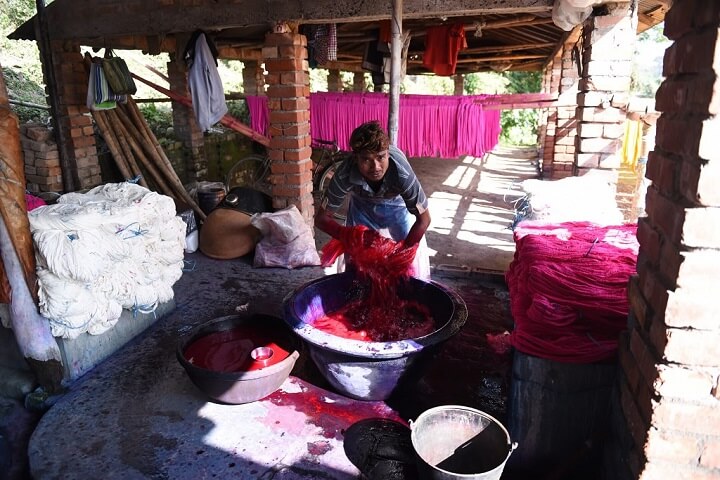
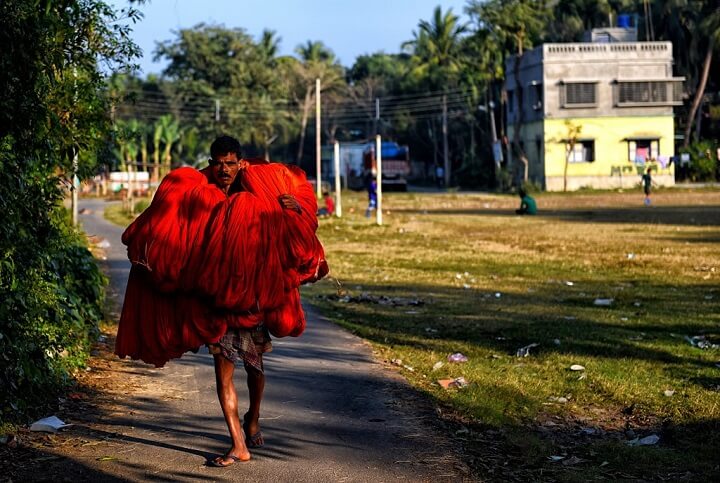
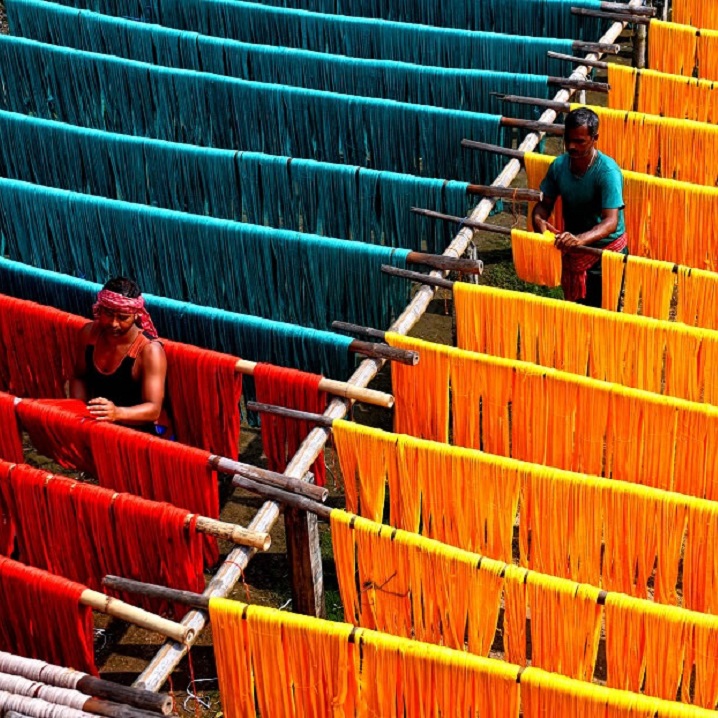
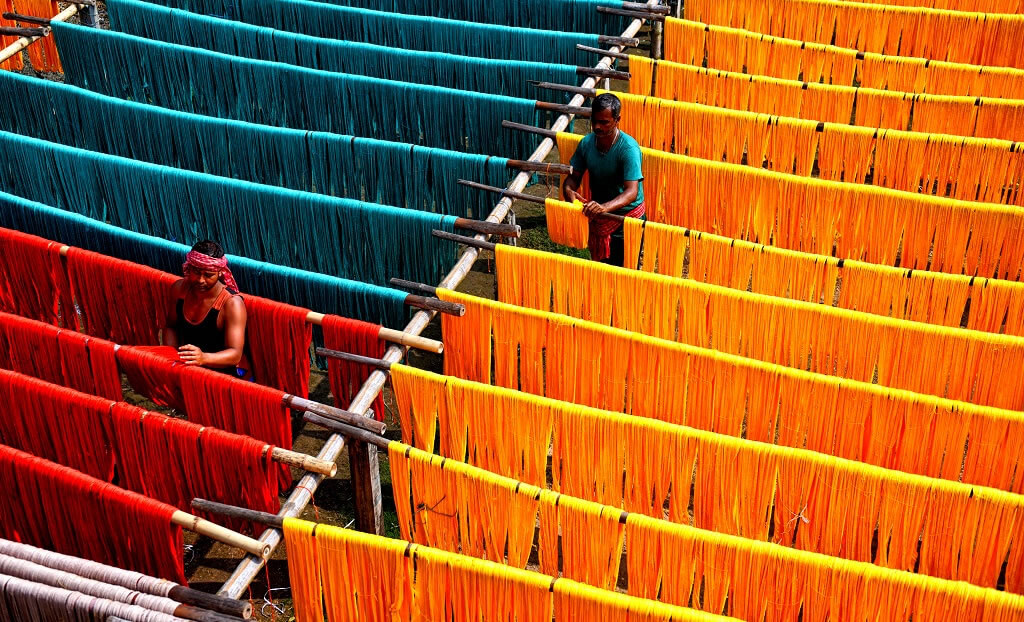 Cotton yarn, dyed and hung to dry
Local women spinning the cotton yarn